
First-Time Home Buyer Guide: Minneapolis 2025

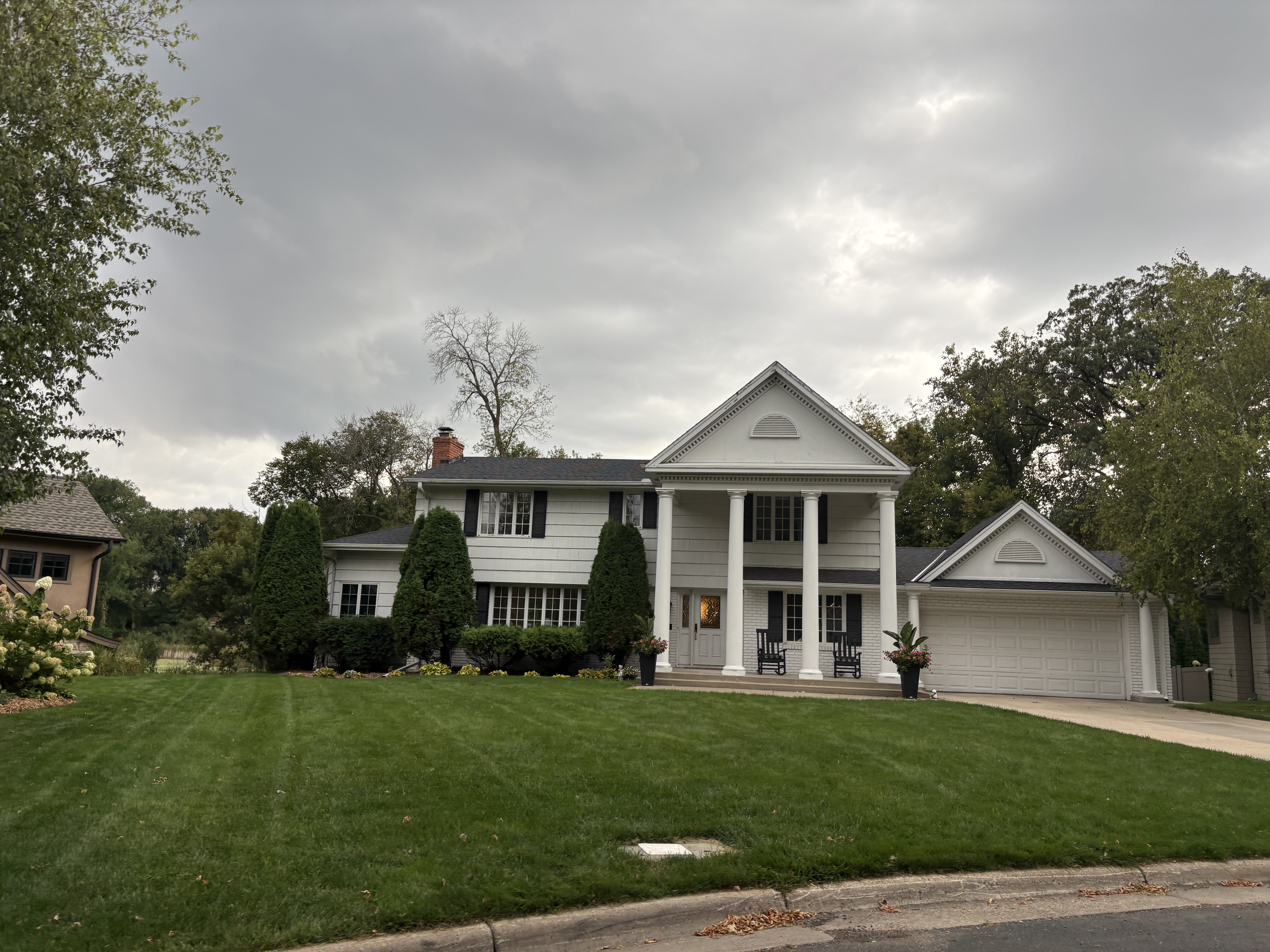
First-Time Home Buyer Guide: Minneapolis 2025
By Arne Johansson | eXp Realty | Minneapolis, MN | twincitieshomesforsale.com
Buying your first home in Minneapolis is one of the most exciting — and overwhelming — things you'll ever do. There's a lot of advice out there. Most of it is generic. This guide isn't.
I'm Arne Johansson, a Minneapolis realtor with eXp Realty. I've sold nearly 400 homes across the Twin Cities. I've sat across the table from hundreds of first-time buyers, watched them make great decisions and costly mistakes, and guided them through a process that most people only go through a handful of times in their lives.
This guide covers the four things I see first-time buyers struggle with most in the Minneapolis market: getting pre-approved the right way, making a competitive offer, understanding the true costs of homeownership, and avoiding the mistakes that derail first-time buyers before they ever get to closing.
|
Who This Guide Is For This guide is written specifically for first-time buyers in Minneapolis and the Twin Cities metro. Some details — costs, programs, market dynamics — are specific to Minnesota. If you're relocating from another state, pay especially close attention to the Minnesota-specific sections. |
STEP 1: Get Pre-Approved Before You Do Anything Else
I'll say this plainly: do not start looking at homes until you have a pre-approval letter in hand. Not a pre-qualification — an actual pre-approval where a lender has reviewed your income, assets, credit, and debt.
Here's why this matters in the Minneapolis market specifically: desirable homes in the Twin Cities routinely receive multiple offers within days of hitting the market. If you find a home you love and don't have pre-approval ready, you cannot make a competitive offer. You will lose the house. I've watched this happen more times than I can count.
Pre-Qualification vs. Pre-Approval: Know the Difference
Pre-qualification is a quick estimate based on self-reported financial information. It takes 10 minutes online and is essentially meaningless in a competitive market. Sellers and their agents know it requires no verification.
Pre-approval means a lender has actually pulled your credit, reviewed pay stubs and tax returns, and verified your assets. It carries weight. Sellers take it seriously. This is what you need.
What Lenders Look At in Minnesota
- Credit score — most conventional loans require 620+; better rates start at 740+
- Debt-to-income ratio (DTI) — your monthly debt payments vs. your gross monthly income; most lenders want DTI under 43%
- Employment history — typically 2 years of steady employment in the same field
- Down payment source — lenders verify where your down payment is coming from; gift funds have specific documentation requirements
- Reserves — many lenders want to see 2–3 months of mortgage payments in savings after closing
Minnesota Down Payment Assistance Programs
If you're a first-time buyer in Minnesota, there are programs specifically designed to help with down payment and closing costs. These are worth exploring before you assume you need 20% down:
- Minnesota Housing Finance Agency (MHFA) — offers down payment assistance loans and below-market mortgage rates for qualifying buyers
- Start Up Program — MHFA's flagship first-time buyer program; income and purchase price limits apply
- Step Up Program — for repeat buyers or those who don't meet first-time buyer definition but need assistance
- Minneapolis and St. Paul both have city-level assistance programs with additional grant options for buyers purchasing in targeted neighborhoods
Ask your lender specifically about MHFA programs. Not all lenders are approved MHFA lenders — make sure yours is if you want access to these programs.
|
Arne's Advice Get pre-approved by at least two lenders and compare. Mortgage rates, fees, and loan products vary more than most buyers realize. A difference of 0.25% on your interest rate can mean tens of thousands of dollars over the life of a 30-year loan. Shopping lenders is not disloyal — it's smart. |
STEP 2: How to Make a Competitive Offer in the Twin Cities
The Minneapolis market in 2025 remains competitive for well-priced homes. Inventory has improved from the lows of 2021–2022, but move-in-ready homes in desirable neighborhoods still attract multiple buyers. Knowing how to structure a strong offer is the difference between getting the home and watching it go to someone else.
What Makes an Offer Competitive
Price is the most obvious lever — but it's not the only one. Here's what I look at when building an offer strategy for my buyers:
- Offer price relative to list and recent comps — going above list is sometimes necessary, but only if the home will appraise
- Escalation clauses — in multiple-offer situations, an escalation clause automatically increases your offer up to a set maximum if a competing offer comes in higher
- Earnest money amount — a larger earnest money deposit signals commitment; in Minneapolis, 1–2% of purchase price is standard, going higher stands out
- Inspection contingency terms — waiving inspection entirely is risky; limiting it to major issues or shortening the inspection period is a middle ground
- Financing contingency — sellers prefer buyers with strong financing or cash; a larger down payment and strong pre-approval letter matter
- Closing date flexibility — matching what the seller needs on timing can win you a home even if your price isn't the highest
- Personal letter — controversial and not always advisable given fair housing considerations, but in some situations it matters
The Appraisal Gap — A Minneapolis Reality
In competitive situations where buyers are offering above list price, there's a risk the home doesn't appraise at the offer price. If that happens, your lender will only loan based on the appraised value — leaving a gap between what you offered and what the bank will fund.
Appraisal gap coverage means you commit in your offer to cover some or all of that gap out of pocket. For example: 'Buyer agrees to cover appraisal gap up to $10,000.' This is a significant commitment and requires having those funds available — but it makes your offer dramatically more attractive to sellers in hot markets.
When to Walk Away
Competitive doesn't mean reckless. I coach my buyers on a firm maximum offer based on the home's value and their financial situation — and we don't cross it. Overpaying by $30,000 in the heat of a bidding war is a mistake that follows you for years. There will always be another home.
STEP 3: The True Cost of Homeownership in Minneapolis
This is the section most first-time buyer guides skip. Your mortgage payment is not your only housing cost — and in Minnesota, some of these additional costs are higher than the national average. Going in unprepared is one of the biggest financial mistakes first-time buyers make.
Upfront Costs at Closing
Before you even make your first mortgage payment, here's what you need to have ready:
|
Cost Item |
Typical Range in Minneapolis |
|
Down payment (conventional, 5–20%) |
Varies by loan and price |
|
Home inspection |
$350 – $600 |
|
Appraisal fee |
$500 – $800 |
|
Lender origination fees |
$1,000 – $3,000 |
|
Title insurance (owner's policy) |
$800 – $1,500 |
|
Title search and closing fees |
$500 – $1,000 |
|
Pre-paid homeowner's insurance (1 year) |
$1,200 – $2,500 |
|
Pre-paid property taxes (escrow) |
2–3 months of taxes |
|
Minnesota deed tax |
0.33% of purchase price |
|
Moving costs |
$1,000 – $5,000+ |
|
Total estimated closing costs (excl. down payment) |
2% – 4% of purchase price |
Ongoing Monthly Costs Beyond Your Mortgage
Your PITI — Principal, Interest, Taxes, and Insurance — is what most people think of as their mortgage payment. But there's more:
- Property taxes in Minneapolis and the Twin Cities metro vary significantly by municipality — budget 1–1.5% of home value annually; Minnesota does offer a Homestead Market Value Exclusion that reduces taxable value for primary residences
- Homeowner's insurance — $100–$200/month is typical in Minnesota; higher for older homes or those with certain features
- HOA fees — if applicable, can range from $100–$600+/month in the Twin Cities metro
- Utilities — Minnesota winters are real; heating costs in an older, poorly insulated Minneapolis home can run $200–$400/month in peak winter months
- Maintenance and repairs — the standard rule is budget 1% of home value per year; for older Minneapolis homes, budget 1.5–2%
The Minnesota Winter Cost Reality
This is something out-of-state buyers consistently underestimate. Owning a home in Minneapolis means budgeting for things that don't exist in warmer climates: heating bills, snow removal (driveway plowing or a snowblower), ice dam prevention and repair, exterior maintenance that gets compressed into a short fall window, and the accelerated wear that freeze-thaw cycles put on every exterior surface.
I've seen buyers from warmer states get blindsided by their first Minnesota winter as homeowners. Budget for it before you buy, not after.
|
Real Number to Know On a $350,000 Minneapolis home, a reasonable first-year total homeownership budget — mortgage, taxes, insurance, utilities, and basic maintenance — is typically $3,200–$4,000/month. Make sure that number works for your life before you commit. |
STEP 4: Common First-Time Buyer Mistakes in Minneapolis
After nearly 400 transactions, I've seen every mistake there is. Here are the ones that hurt first-time buyers most — and how to avoid them.
Mistake #1: Making Major Financial Moves Between Pre-Approval and Closing
The period between pre-approval and closing is not the time to finance a car, open new credit cards, switch jobs, or make large cash deposits into your bank account without documentation. Your lender will pull your credit again before closing. Any significant change to your financial picture can delay or kill your loan.
The rule: After pre-approval, make no major financial moves without talking to your lender first.
Mistake #2: Skipping the Home Inspection
In competitive markets, buyers are sometimes tempted to waive inspection entirely to strengthen their offer. I strongly advise against this for first-time buyers. A home inspection is your last real opportunity to understand what you're buying before you own it.
My background in construction means I attend every inspection with my buyers and help them understand exactly what every finding means. There's a difference between 'this needs monitoring' and 'this needs immediate repair.' You deserve to know which is which.
Mistake #3: Falling in Love With a Home Before Doing the Math
Emotional decisions are expensive in real estate. I've watched buyers stretch their budget dangerously thin for a home they fell in love with online — and then struggle for years with a payment that doesn't leave room for anything else in their life.
Set your maximum budget before you start looking — and hold it. The right home is one you can afford to own comfortably, not just buy.
Mistake #4: Not Understanding What's Included in the Sale
In Minnesota, certain items are automatically included in a home sale (fixtures, built-ins) and others are negotiable (appliances, window treatments, garage shelving). Buyers and sellers sometimes have very different assumptions about what stays and what goes.
Everything that matters to you should be explicitly written into the purchase agreement. If the refrigerator, washer, dryer, or backyard playset is important to you — get it in writing before you close.
Mistake #5: Choosing a Realtor Who Doesn't Know the Minneapolis Market
Not all real estate agents are the same, and local knowledge matters enormously. Minneapolis neighborhoods vary dramatically in pricing, buyer competition, property types, and long-term value trajectories. An agent who mostly works in the suburbs will miss nuances that matter when you're buying in Longfellow vs. Linden Hills vs. Northeast.
Beyond market knowledge, your buyer's agent costs you nothing in Minnesota — the seller pays both agents' commissions in almost all transactions. There's no financial reason to work with anyone but the most experienced, knowledgeable agent you can find.
Mistake #6: Underestimating How Fast You Need to Move
Good homes in Minneapolis don't wait. I've had buyers who loved a home, wanted to 'think about it overnight,' and woke up to find it had three offers already. In a competitive market, hesitation costs you houses.
The antidote is preparation: know your budget, have your pre-approval ready, trust your agent's read on the market, and be ready to make a confident decision when the right home appears. You should be able to make an offer within hours of seeing a home — not days.
What to Expect: Your Minneapolis Home Buying Timeline
Here's a realistic timeline for a first-time buyer in Minneapolis from start to keys in hand:
- Weeks 1–2: Consult with a realtor, choose a lender, gather financial documents
- Weeks 2–3: Complete lender application, receive pre-approval letter
- Weeks 3–8: Active home search — touring homes, refining priorities
- Days 1–3 after finding a home: Write and negotiate offer, execute purchase agreement
- Days 3–17: Inspection period — schedule inspection, review report, negotiate repairs or credits
- Days 14–30: Appraisal ordered by lender, underwriting begins
- Days 30–45: Final loan approval, clear to close issued
- Day 45–50: Final walkthrough, closing day — you get the keys
Total time from starting your search to closing: typically 2–4 months for a first-time buyer in Minneapolis, though it can be faster if you're decisive and prepared, or longer if the market is competitive and it takes time to find the right home.
|
Ready to Buy Your First Home in Minneapolis? Book a free consultation with Arne Johansson — nearly 400 homes sold in the Twin Cities. No pressure, no jargon. Just honest guidance from someone who's been through this process hundreds of times. |
|
About the Author Arne Johansson is a Minneapolis Realtor with eXp Realty and has sold nearly 400 homes across the Twin Cities. With a background in construction — including building new construction duplexes, remodeling dozens of single-family homes, and developing vacant land — Arne brings a level of property knowledge most realtors simply don't have. He serves buyers and sellers throughout Minneapolis, St. Paul, and the full Twin Cities metro. |
Categories
Recent Posts





GET MORE INFORMATION